How much margin does third-party delivery commission take from each plate you sell?
The plate cost does not change when an order comes through a delivery app, but the price you keep does. Here is how to cost delivery orders honestly.
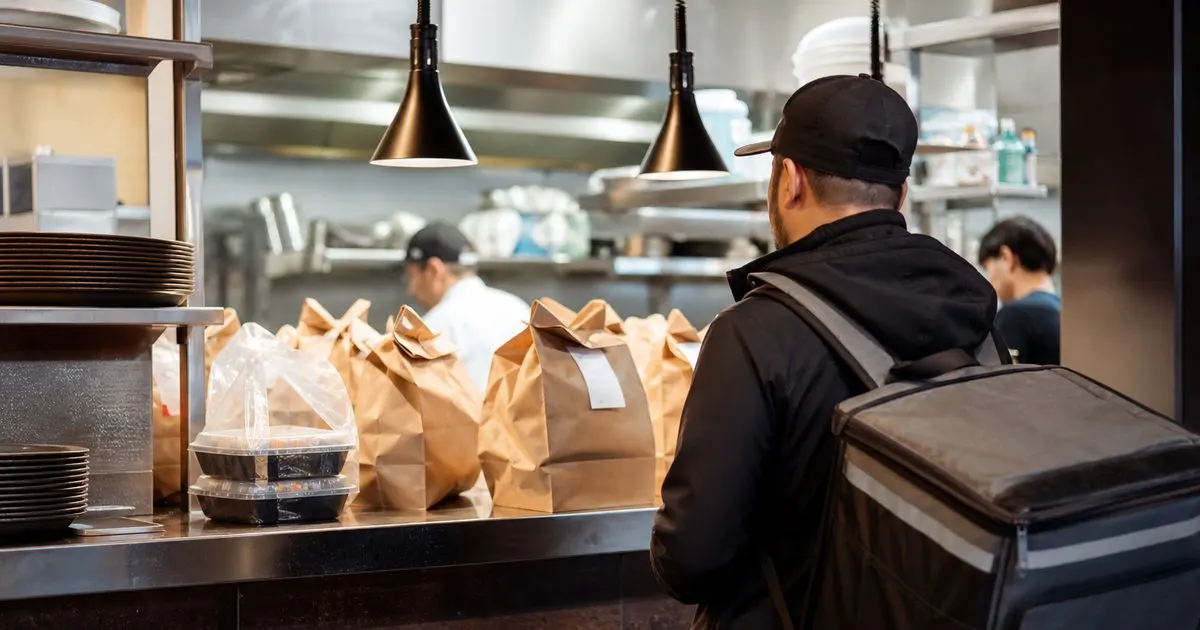
The same plate, a very different margin
When a guest orders a dish in the dining room, the price on the menu is roughly the price you keep, minus card fees. When the same dish is ordered through a third-party delivery platform, a commission comes off the top before the money reaches you, and that commission is typically a substantial share of the ticket depending on the plan you chose. The plate cost is unchanged, so every dollar of commission comes straight out of your contribution margin. Related: What is food cost percentage and why does it matter for a menu?
Work it through with a hypothetical. Suppose a dish sells for twenty dollars with a six dollar plate cost, giving fourteen dollars of contribution in the dining room. If a platform keeps a quarter of the ticket, you receive fifteen dollars, and after the six dollar plate cost you keep nine. The same dish, the same cook, the same ingredients, and roughly a third less contribution. That is before packaging, which the dining room does not need. Related: How do you protect margins when ingredient prices keep rising fast?
Keep reading: How do you cost a recipe accurately down to the true plate cost?, What is food cost percentage and why does it matter for a menu?, How should you price a menu using both plate cost and target margin?. See how PlateCostr helps you recipe food-cost and menu margin calculator.
Costing the delivery version as its own recipe
The honest way to see this is to create a delivery version of each dish in your costing system. Same ingredients and portions, plus the packaging as a costed component: the container, the lid, the bag, the cutlery kit, the sauce cup, the label. Packaging on a single order can add a meaningful amount, especially for items that need multiple compartments or insulated containers. It belongs in plate cost, not in a general overhead bucket where nobody sees it. Related: How do you cost a recipe accurately down to the true plate cost?
Then apply the commission as a deduction from the selling price rather than as a cost line, because that is how it behaves: it scales with the price, not with the ingredients. Your costing tool should be able to show you contribution per dish for dine-in, pickup, and each delivery channel side by side. Once you see the delivery contribution next to the dine-in contribution, the decisions about pricing and menu selection get much clearer.
Pricing and menu choices for delivery
Many operators run a separate delivery menu price that is higher than the dine-in price, within whatever the platform's rules and local regulations allow. That is a reasonable response to a real cost, and guests ordering delivery generally expect some premium. The question is how much. Price so the delivery contribution in dollars lands close to the dine-in contribution, and check that the resulting price is not so high that order volume falls off.
Trim the delivery menu to items that travel well and carry strong margin. Fried items that turn soggy, plated dishes that depend on presentation, and low-margin plowhorses are poor candidates. High-margin items that hold temperature, portion easily into a container, and reheat well are ideal. A shorter, better-margin delivery menu usually outperforms a copy of the full menu, both in profit and in review scores.
Deciding whether a channel is worth it
Delivery is incremental business for some restaurants and cannibalized business for others. If the orders come from people who would otherwise not have bought from you, even a thin contribution is real money against fixed costs you already pay. If the orders replace dine-in or direct pickup at full price, the commission is a pure loss. Look at your sales mix by channel over time and be honest about which one you are.
Revisit the numbers each time a platform changes its fee structure or you change your menu. Because the commission scales with price, a menu-wide price increase changes delivery contribution differently than dine-in. Keeping the delivery versions of your recipes costed and current means that review takes minutes, and you can compare channels using the same plate-cost foundation the rest of the business runs on. Related: How should you price a menu using both plate cost and target margin?
- Commission comes off the selling price while plate cost stays the same, so it reduces contribution margin dollar for dollar.
- Cost a delivery version of each dish that includes packaging as a real component, and model commission as a price deduction.
- Price delivery items so dollar contribution approaches dine-in, and limit the delivery menu to high-margin items that travel well.
- Judge each channel on whether its orders are incremental or cannibalized, and re-run the math when fees or prices change.

Julien Jimenez
Julien Jimenez is an independent software builder based in Paris. He designs, ships, and operates focused SaaS products for small businesses and independent professionals. Read the full author page.
Know The True Cost Of Every Plate
Recipe food-cost and menu margin calculator. PlateCostr is built to help you put this into practice.
Start free trialMore from the PlateCostr blog

How do you cost a recipe accurately down to the true plate cost?
What is food cost percentage and why does it matter for a menu?

How should you price a menu using both plate cost and target margin?
Get the PlateCostr playbook
Practical guides on menu costing and margin, straight to your inbox as we publish them. No spam, unsubscribe any time.